


Your Cannabis Strain Library: A Consumer's Guide

May 21, 2026

Your Cannabis Strain Library: A Consumer's Guide

Most people assume that knowing whether a strain is indica or sativa tells them everything they need to make a smart choice. It doesn't. 85.7% of strains are hybrids , and terpene profiles drive effect differences far more than type labels ever could. A proper cannabis strain library changes how you shop entirely. It moves you past guesswork and into data you can actually use, from genetics and cannabinoid content to lab-verified terpene data and lineage tracing. This guide breaks down how these libraries work and how to use them well.

Key takeaways

Point Details
Terpenes over type labels Terpene profiles predict effects more reliably than indica/sativa/hybrid categories.
Data quality matters Confidence scores and lab COAs separate reliable strain data from educated guesses.
Genetics reveal full picture Lineage and parent strain data explain why two strains with the same name can feel completely different.
THC numbers can mislead Testing method differences mean THC percentages across labs may not be directly comparable.
Use effects-first filters Searching by desired outcome, like sleep or focus, leads to better strain matches than searching by name alone.

What a cannabis strain library actually is

A cannabis strain library is a structured database that catalogs strains by their genetics, cannabinoid content, terpene profiles, lineage, and sometimes user-reported effects. The concept grew out of seed bank catalogs and breeder documentation, then evolved into digital platforms as legal markets expanded and consumer demand for transparency increased.

The most useful libraries go well beyond a name and a photo. They track:

  • Genetics and lineage : Parent strains and breeding history
  • Cannabinoid profiles : THC, CBD, CBG, and other cannabinoid percentages
  • Terpene data : Primary and secondary terpenes tied to aroma and effect
  • Aliases : Multiple names that different regions or breeders use for the same strain

That last point is more important than most people realize. PhenoDB maintains over 424 alias mappings to consolidate naming inconsistencies across its database of more than 56,000 verified strains. Without that kind of alias resolution, searching for "OG Kush" versus "Premium OG" could return fragmented results pointing to the same plant.

Pro Tip: When using any cannabis strain database, check whether it assigns a confidence score to its data. Databases that score data quality based on lab certificates of analysis (COAs) and verified breeder records give you significantly more accurate information than crowd-sourced-only platforms.

Understanding the core elements of strain profiles

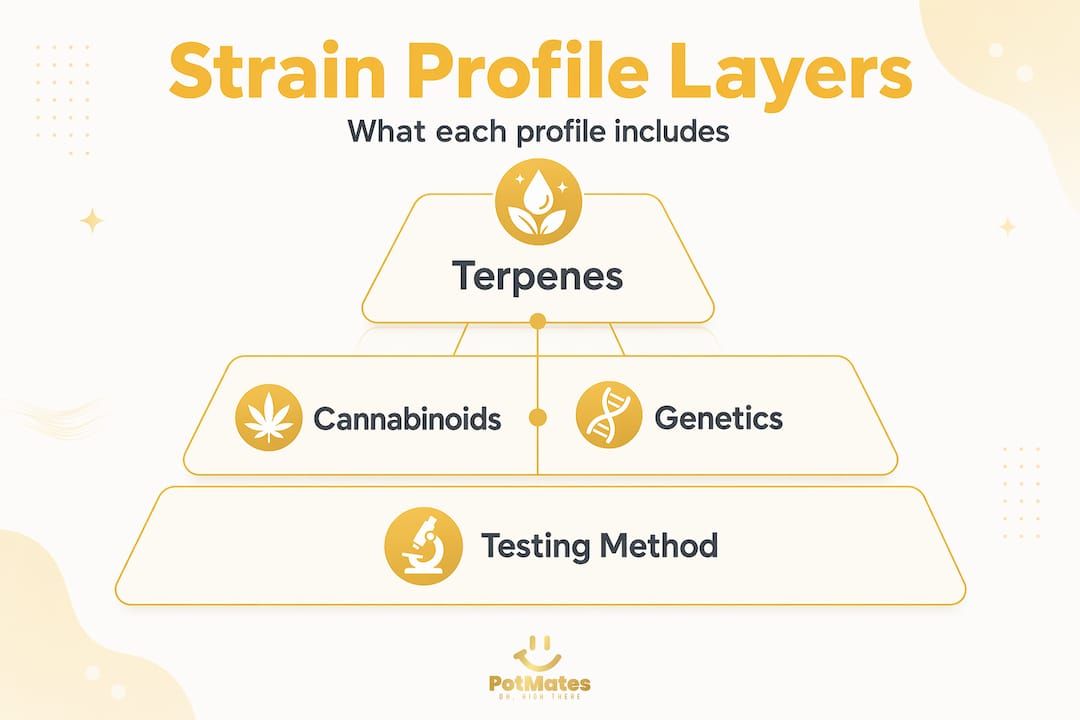
When you pull up a strain profile in any solid library, you're looking at several layers of information. Knowing what each one means helps you read them critically instead of just skimming for THC percentage.

Genetics and lineage tell you where a strain came from and why it behaves the way it does. If Blue Dream is a cross of Blueberry and Haze, that explains both its sweet berry aroma and its cerebral, energizing quality. Parent strain traits carry forward in predictable ways, which is why understanding cannabis genetics gives you a real advantage when picking something new.

Cannabinoid content is the number most people focus on first. THC sets the potency ceiling, while CBD can soften the psychoactive edge and add relaxation or anti-inflammatory properties. A strain like Fire OG carries roughly 20% THC along with a full terpene suite and a 9 to 10 week flowering time. That kind of detail matters when you're comparing options.

Here's the part most people miss on cannabinoid data: the testing method changes everything. GC-based testing reports THC values 5 to 15% higher than HPLC methods on the same sample. If a library doesn't disclose or normalize its testing methodology, those percentage comparisons across strains are potentially misleading. For medical cannabis consumers, this is especially worth checking, since accurate dosing guidance depends on reliable cannabinoid numbers.

Terpenes are where the real effect story lives. The myrcene-heavy profile of a strain like Granddaddy Purple explains the heavy body sensation more accurately than any indica label. Caryophyllene contributes a peppery, slightly spicy aroma and is the only terpene that binds directly to cannabinoid receptors. Limonene lifts mood and adds a citrus brightness. Exploring Oregon-grown terpene profiles is genuinely one of the most satisfying ways to understand why two strains feel so different even at the same THC percentage.

How to navigate a strain library effectively

Using a strain library well is a skill, and it's one most casual consumers never develop because the tools look more complicated than they are. Here's how to get real value from them:

  1. Start with your desired effect, not a strain name. Filter by outcomes like relaxation, sleep, focus, or creative energy. Consumer demand increasingly favors effects-first searches because they match how people actually think about their cannabis use.
  2. Check the confidence score or data source. A strain with a high confidence score backed by lab COAs is more trustworthy than one built entirely from user reviews or breeder marketing copy.
  3. Read reviews critically. Cannabis strain reviews reflect individual biology, tolerance, and consumption method. Look for patterns across many reviews rather than anchoring to one strong opinion.
  4. Use visual ID tools with caution. AI-powered photo identification tools can match uploaded images to possible strains, but visual ID only offers rough guidance , not confirmed genetics or chemical profiles. Treat them as a starting point, not a verdict.
  5. Watch for alias traps. Searching a popular strain name often surfaces multiple entries representing different genetic lineages. Cross-reference the parent strain data before assuming two products labeled identically are the same plant.

Pro Tip: If you're using a cannabis strain database for medicinal purposes, pair your research with a clinician's guidance on dosing. CBD-based treatments, for example, typically start at carefully supervised doses, and strain data should supplement professional advice rather than replace it.

Comparing the main types of strain libraries

Not all libraries serve the same purpose, and understanding the difference helps you pick the right tool for your question.

Genetics-first databases like PhenoDB prioritize breeding history, lineage tracing, and lab-verified cannabinoid data. They're built for depth. If you want to understand why a strain behaves the way it does, this is your resource. The tradeoff is that they can feel dense for casual use.

Effects-first consumer platforms organize strains around user experience: mood, activity, flavor preference, and medical need. They're far more accessible and useful for everyday shopping decisions. The limitation is that effect data often leans heavily on self-reported user experiences rather than lab science.

Lineage-tracing tools like Strain Ancestry sit in a middle ground, focusing specifically on breeding chains and genetic origin without necessarily covering effects in depth. They're niche but genuinely useful if you're trying to trace a particular cultivar's history.

The smartest approach combines all three. Start with an effects-first platform to identify candidates, then cross-reference genetics on a deeper database to confirm the lineage holds up. For a practical overview of how strain types connect to benefits and selection , that combination gives you the clearest picture.

My honest take on strain libraries right now

I've spent a lot of time with both professional databases and consumer-facing strain tools, and here's what I keep coming back to: most people are using the wrong resource for the question they're actually asking. If you want to know whether a strain will help you sleep, a genetics database is overkill. If you want to know whether the "Gorilla Glue #4" you just saw is authentic lineage, a consumer review platform won't cut it.

What I find genuinely underused is the terpene filter. Every experienced consumer I know navigates by terpene profiles now rather than type labels, because terpenes predict effects with far more consistency than broad category names. It's a shift in how you think, but once you make it, you stop being surprised by "indica" strains that feel energizing or "sativa" strains that put you on the couch.

The other thing worth watching: the DOJ's April 2026 rescheduling moves for FDA-approved cannabis products are going to push labeling standards across the board. Better federal oversight means better required disclosure, which will make strain library data more consistent and comparable over time. That's genuinely good news for consumers who care about accuracy.

— Hammond

Explore premium strains with Potmates

Knowing your way around a strain library is half the battle. The other half is finding top-shelf products that actually deliver on what the data promises. Potmates sources from trusted Oregon growers and curates every product on its menu with quality and consistency in mind. Whether you're after flower, concentrates, or you prefer to skip smoking entirely and explore non-smoking alternatives like edibles, vapes, or cannabis topicals , the Potmates menu has something worth browsing. Fast, discreet delivery to Portland. No guesswork. START DELIVERY HERE!

FAQ

What is a cannabis strain library?

A cannabis strain library is a structured database cataloging strains by their genetics, cannabinoid content, terpene profiles, and lineage. Top databases like PhenoDB track over 56,000 verified strains with confidence scores tied to lab-verified data.

Are indica and sativa labels reliable in strain databases?

Not really. 85.7% of cataloged strains are hybrids, and terpene profiles are far more accurate predictors of effects than indica or sativa classifications.

Why do THC percentages vary between strain databases?

Testing method differences account for most of the variation. GC methods report THC values 5 to 15% higher than HPLC testing on the same sample, so databases that don't disclose their testing standard make cross-strain comparisons unreliable.

Can I identify a cannabis strain from a photo?

AI-powered visual tools can suggest possible matches, but they cannot confirm genetics or chemical profiles. Visual ID tools are best used for rough guidance only, not as a substitute for lab documentation.

What's the best way to use a cannabis strain library for medicinal purposes?

Search by desired therapeutic effect and prioritize strains with lab-verified cannabinoid and terpene data. Cross-reference results with a clinician's guidance on dosing, especially when using cannabis for specific medical conditions.

Recommended

May 31, 2026
Discover how to optimize home cannabis use for better results. Master dosing, product selection, and techniques for a relaxing experience!
May 20, 2026
Discover how to maximize cannabis effects in Portland with our expert guide. Learn consumption tips for a better, more satisfying experience.
May 19, 2026
Discover what home cannabis experiences really mean! Explore unique ways to enjoy cannabis at home, from relaxation to social gatherings.
May 18, 2026
Discover the ultimate cannabis flower types list in our 2026 Strain Guide. Learn what sets each strain apart for smarter selections!
May 17, 2026
Discover what cannabis consumption really means in our 2026 guide. Learn about different methods, effects, and how to optimize your experience.
May 16, 2026
Curious about what are cannabis discounts? Discover how Portland shoppers can save money on dispensary deals with our comprehensive guide.
May 15, 2026
Discover what cannabis flower is and how to choose quality products in Portland. Your ultimate guide to an enriched cannabis experience.
May 14, 2026
Discover what cannabis e-commerce is and how it ensures safe, legal online purchasing in Portland. Learn the ins and outs today!
May 13, 2026
Discover how to maximize cannabis effects in Portland with our expert guide. Learn consumption tips for a better, more satisfying experience.
May 12, 2026
Confused about recreational vs medicinal cannabis? Discover how to choose the right path for your wellness in Portland with our expert guide.
Show More