

The Real Role of Education in Dispensaries (And Why It Matters)
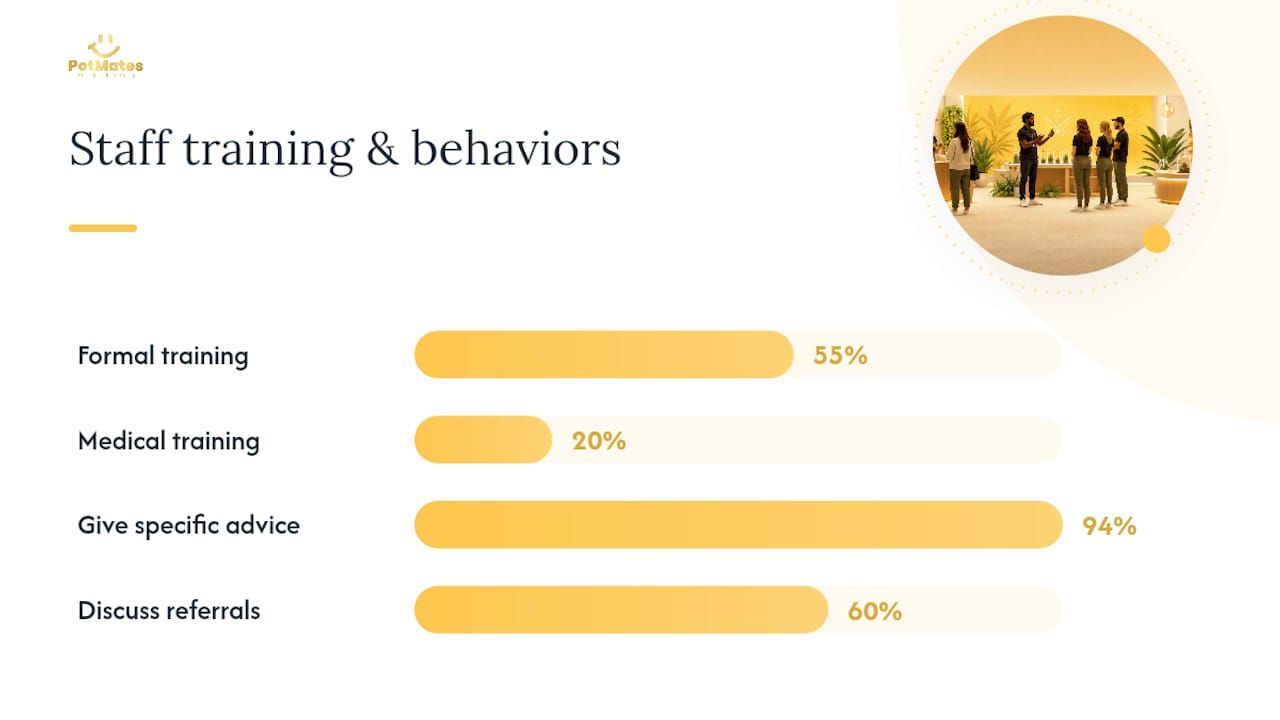
Education inside dispensaries makes purchases safer and more effective by giving customers tailored guidance, reducing dosing mistakes, and lowering compliance risk. That's the whole thesis, backed by real numbers: one peer-reviewed study found 55% of dispensary staff had received some formal training, yet 94% still gave specific product advice. The role of education in dispensaries isn't a nice add-on. It's the difference between a guess and a recommendation you can trust.
Here's what we cover:
- Why education actually changes outcomes for customers and businesses
- What well-trained budtenders know that untrained ones don't
- How training models stack up (state courses vs. certificates vs. shadowing)
- A practical checklist for customers and managers
- How PotMates builds education into a delivery-only model
Key Takeaways
Structured, ongoing education in dispensaries reduces dosing errors, improves compliance outcomes, and builds the customer trust that drives repeat business.
| Point | Details |
|---|---|
| Formal training is common but shallow | 55% of staff report formal training, but only 20% report medical or scientific training. |
| Staff give advice regardless of training level | 94% of staff report giving specific cannabis advice, which raises the stakes for training quality. |
| Referral habits matter | About 60% of staff discuss involving healthcare professionals for customers with relevant health conditions. |
| No single training standard exists | State vendor courses, certificate programs, and peer shadowing all coexist with varying depth. |
| Delivery models can educate too | Virtual budtenders and structured content pages can replicate in-store guidance without a physical counter. |
Why Education Matters in Dispensaries
Most cannabis customers get their information from one place: the person behind the counter, or these days, the screen in front of them. There's no prescribing doctor walking them through dosage. There's no pharmacist double-checking interactions. The budtender or the product page is the safety net, which is exactly why training gaps are so consequential.
The gap is real. Only 20% of staff reported medical or scientific training, despite the vast majority routinely advising on dosing, product choice, and effects. That mismatch is where problems start: too-strong edibles, mismatched terpene profiles, products that don't fit someone's tolerance.
Education fixes this from multiple angles:
- Fewer adverse reactions from overconsumption or poor product fit
- Higher customer confidence, which shows up as repeat visits
- Better average order value, since informed customers buy what actually works for them instead of returning it
- Reduced liability exposure for the dispensary
Knowledgeable staff aren't just a customer service nice-to-have. They're a measurable driver of trust and revenue.
What Well-Trained Staff Actually Know
Good budtenders aren't just naming strains. They're translating chemistry into plain language customers can act on. That means fluency in a few core areas:
- Cannabinoid ratios. Knowing the practical difference between a 1:1 THC/CBD product and a 20:1 THC-dominant one, and how that changes the experience.
- Terpenes. Explaining why a myrcene-heavy flower feels sedating while a limonene-forward one feels brighter, without overselling unproven claims.
- Format differences. Onset and duration vary wildly. An edible can take 45 to 90 minutes to hit; a vape works in minutes. Our cannabis consumption guide breaks this down further.
- Reading a COA. Certificates of Analysis show potency and contaminant testing. Staff should be able to explain what those numbers mean, not just point at them.
- Screening, carefully. Asking about tolerance and current medications matters, but good training draws a hard line between screening and diagnosing. One study on budtender approaches found 82% of surveyed staff favored patient-centered conversations, even while avoiding formal medical advice to limit liability.
Pro Tip: If a budtender can't explain why a product's onset time matters for your plans that night, ask a follow-up question. A well-trained staffer will slow down and walk you through it instead of just pointing at the shelf.
How Dispensary Staff Actually Get Trained
Training in this industry is a patchwork, and it shows. There's no single, national certification. What exists instead is a mix of models, each with real strengths and real gaps:
- State-mandated responsible vendor courses. These cover legal basics like age verification and packaging rules, but rarely touch clinical topics like drug interactions.
- Certificate and continuing-education programs. Options like UNM's cannabis retail certificate go deeper into plant biology, compliance, and customer service than a one-day vendor course can.
- Peer-to-peer shadowing. Common in smaller shops, but inconsistent. One employee's habits become the next hire's "training," for better or worse.
- Ongoing refreshers. The strongest programs treat training as continuous, not a one-time onboarding checkbox.
Research on dispensary personnel backgrounds backs this up: interviews reveal uneven baseline knowledge and frequent reliance on informal peer learning, with workers often self-funding continuing education because employers don't require it. That's a gap standardized training could close, and it's one of the clearest arguments for treating cannabis education as a real career track rather than a retail afterthought.
How Education Improves Safety and Trust
The compliance angle gets less attention than product knowledge, but it might matter more. Trained staff make fewer age-verification mistakes, fewer packaging errors, and fewer sales that violate state purchase limits. That's not speculation. It's the practical outcome of documented, POS-integrated training programs that reduce audit risk.
There's also a referral piece that doesn't get talked about enough. About 60% of dispensary staff report discussing involving a healthcare professional when a customer mentions a medical or psychiatric comorbidity. That's a meaningful safety net for people managing conditions where cannabis interacts with other treatments.
Beyond individual transactions, education shapes public perception:
- Community outreach events reduce stigma and build local trust
- Consistent, accurate staff answers build a dispensary's reputation over time
- Compliance-first training protects the business's license, which protects customer access long-term
What to Look For, Step by Step
Whether you're ordering online or walking a counter, a few habits separate an informed purchase from a guess.
If you're the customer:
- Ask about onset and duration for your specific product format.
- Request the COA and ask what the potency numbers mean for your tolerance.
- Mention any medications or health conditions relevant to interactions, without expecting medical advice in return.
- Notice whether the answers are specific or vague. Vague is a red flag.
If you're managing a dispensary:
- Document standard operating procedures for every customer-facing role.
- Require shadowing periods before staff work solo.
- Schedule quarterly refreshers, not just initial onboarding.
- Log training records for every employee. It matters during audits and it protects the business.
Pro Tip: Watch for pressure selling paired with evasive COA answers. That combination is the clearest sign a shop prioritizes moving inventory over guiding you to the right product.
Red flags to walk away from: staff who can't explain dosing basics, inconsistent answers between employees, or reluctance to show lab results. If you're still narrowing down where to shop, our guide on choosing the right dispensary walks through what else to check.
Education Without a Storefront: The PotMates Example
Delivery-only dispensaries face a real challenge: no counter, no face-to-face conversation, no chance to read body language when a customer looks confused. PotMates built around that constraint instead of ignoring it.
The virtual budtender replicates the counter conversation through AI-driven product recommendations tailored to what a customer says they want. Educational content pages walk through cannabinoids, formats, and dosing before checkout, not after. Curated product guides do the work a knowledgeable in-person staffer would normally do.
For other operators, the lesson translates directly: structured content and consultation workflows can carry the same educational weight as a physical counter, if built with the same rigor as staff training.
Curious how this plays out for people who don't want to smoke at all? Our guide to cannabis products for people who don't like smoking applies the same education-first approach to format selection.
What the Research Actually Supports, and What It Doesn't
Most advice on this topic treats "training" as a binary: dispensaries either have it or they don't. The research says something messier. Fifty-five percent of staff report some formal training, but that number collapses fast once you ask what kind. Vendor compliance courses teach someone not to sell to a minor. They don't teach someone how a 1:1 CBD tincture interacts with an SSRI.
The conventional advice, "look for a knowledgeable budtender," undersells the problem. Knowledgeable compared to what baseline? The data shows most staff are confident and communicative regardless of training depth. Confidence isn't the signal customers should chase. Specificity is. A staffer who can explain why a terpene profile might affect sleep differently than another, or who defers to a doctor on medication interactions instead of guessing, is doing the job right.
If you take one thing from this, prioritize dispensaries that document their training and put education in writing, whether that's a printed COA explanation or a virtual consultation flow. Verbal reassurance is cheap. A documented process is not.
This article is general information, not a substitute for advice from a qualified doctor. Consult a qualified healthcare professional about your own circumstances before acting on anything here.
Sources
The research behind this article draws on peer-reviewed work and industry-specific training resources. The foundational study on staff training rates and advice-giving behavior is Training and Practices of Cannabis Dispensary Staff, alongside a companion study on referral practices for comorbidities. For a look at training gaps and calls for standardization, see the ASCO Open review of dispensary personnel backgrounds. Operational best practices come from Cova's guide to compliance and POS-integrated training.
For readers who want a compliance angle from outside the cannabis space, King Buddha's guide to CBD compliance covers transparency practices that translate well to dispensary operations. Readers looking for deeper clinical context can also visit PotMates' Cannabis Health and Science page.
FAQ
What are people who work at dispensaries called?
They're most commonly called budtenders, though larger operations also use titles like dispensary agents or cannabis consultants depending on state licensing terms.
What is the role of a dispensary?
A dispensary sells legal cannabis products to verified customers while also serving as the primary source of product education, dosing guidance, and safety information for most buyers.
How do I make my dispensary stand out?
Document your staff training, make lab results easy to access, and give customers specific, honest answers about products rather than generic sales pitches.
Do dispensary staff need medical training?
Most states don't require it. Research shows only 20% of staff report medical or scientific training, even though the vast majority give product-specific advice.
How often should dispensary staff be retrained?
Best practice points to quarterly refreshers on top of initial onboarding, paired with documented training records for compliance purposes.